Introduction
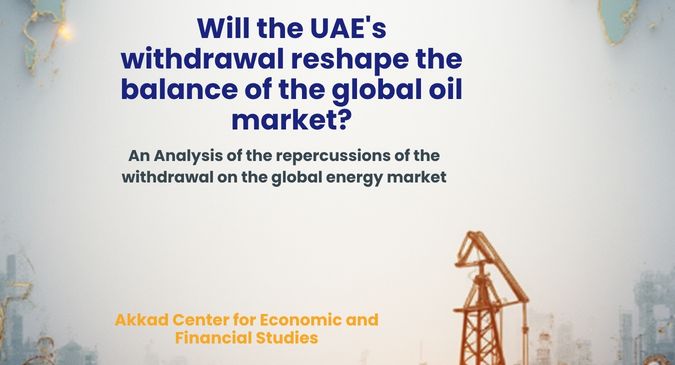
The U.A.E.’s decision to withdraw from O.P.E.C. (Organization of Petroleum Exporting Countries), as well as the O.P.E.C.+ alliance, can’t simply be viewed as a technical measure for managing production; it can be seen as a significant development with potentially far-reaching implications regarding how the structure of the global oil market evolves. O.P.E.C., since its inception in 1960, has been instrumental in determining the tempo of the oil market through coordination of production policy among member countries. Essentially, O.P.E.C.’s purpose has always been to ensure stable price environments and protect the interest of producing countries. However, during the last few decades there have been several dramatic developments that are transforming the nature of the market, particularly the growth of shale oil production in the United States, growing environmental pressure to transition away from fossil fuels to cleaner forms of energy, rising geopolitical tensions in regions where oil is produced and ultimately, increasing competition for traditional sources of oil supply. This provides an opportunity to assess two primary issues: Can O.P.E.C. continue to influence the market or is this the start of the end of the ‘era of oil cartels’?
The reading will explore an extended view of the decision-making process behind this action, while identifying potential impacts on each level and developing possible future directions for the global oil market with respect to whether the U.A.E.’s withdrawal truly represents a tipping point for the global oil market.
- Historical Background – How Has OPEC’s Role Evolved?
It is helpful to examine the history of OPEC, including how it evolved over time. OPEC was founded in Baghdad in 1960, as a reaction by five major petroleum-exporting nations Iran, Iraq, Kuwait, Saudi Arabia and Venezuela– to the total domination of the Seven Sister multinational oil companies. Those multinational corporations controlled every aspect of crude oil extraction (production) and pricing; their objective was to advance their own interests, rather than those of the countries from which the crude oil was being extracted.
Because of the total domination by the Seven Sisters multinational corporations, the five petroleum-exporting nations came together and created OPEC as a collective means of regaining ownership rights to their petroleum resources so that they might be able to set their own national oil policies in a way that allowed each country to gain a fair return on its investment. Since that time, OPEC has become a recognized entity within the global energy community.
The 1970s marked an important point in time for OPEC. Immediately after the 1973 Oil Crisis, Arab states used crude oil as a tool of diplomacy to pressure other nations. The immediate result was an increase in crude oil prices. These actions clearly demonstrated to all involved that if the producing countries worked together and presented a unified front, they could significantly shape global affairs. Therefore, since 1973, any decision regarding crude oil production levels by OPEC (whether to cut or increase) has been one of the most significant factors shaping global price movements.
However, this high degree of influence did not continue unabated. A number of additional obstacles confronted OPEC in the early portion of the 21st century. Chief among these was the rising competitive threat from non-OPEC petroleum producers. Additionally, the increasing involvement of Russia added to OPEC’s dilemma. Another obstacle faced by OPEC was the rise of new producers outside of OPEC which reduced OPEC’s share of the global petroleum market. Before agreeing with OPEC to form what is commonly referred to today as “OPEC+”, Russia was rapidly emerging as a significant petroleum producer.
An additional development impacting OPEC was the rapid growth of the U.S. shale oil industry in the latter-half of the first decade of the 2000s. The U.S. transitioned from being one of the world’s largest buyers of crude oil to becoming one of the world’s largest producers of crude oil. The U.S.’s shift in this regard significantly curtailed OPEC’s ability to effectively regulate global crude oil supplies. Consequently, the ability of OPEC to utilize unilateral decision-making processes to effect global markets continued to diminish. In addition to changes that have occurred on the world stage with respect to energy development, shifting consumption patterns have impacted the importance of petroleum in developed nations. The driving force for this shift has been increasing public demand for alternative energy forms (renewable) and enhanced energy efficiency. Overall, OPEC’s status as a major participant in international energy policy has suffered significantly as a result of these evolving trends. Although it remains an exceptionally powerful entity, OPEC is currently just one of many organizations having influence over global energy policy.
- The UAE within OPEC – from an active member to an independent player
For many years now the UAE has had a very prominent position inside the Organization of the Petroleum Exporting Countries (OPEC) due to the fact that it is one of the largest producers of petroleum products globally and has one of the world’s biggest oil reserve base and has developed an advanced production infrastructure allowing for steady and expansive increases in production. The UAE has historically been recognized among OPEC members for its relatively good compliance with agreed upon production cuts — particularly during times when OPEC sought to stabilize oil prices by preventing supply shortages — such as occurred in prior crises like the price decline of 2014 and the aftermath of the COVID-19 pandemic. Its continued willingness to commit to production cuts helped reinforce its status as a “reliable” member state willing to balance its own self-interests with those of cooperative team efforts.
However, an apparent divide has emerged between the UAE’s long-term goals and limitations associated with the OPEC quota system that determines how much oil each member produces. The quota system takes into account historical factors and political considerations — and does not necessarily reflect either a given nation’s current production capabilities or its recent investment activities. In terms of losses related to foregone economic opportunities for the UAE — which has made enormous investments to increase its production capability — agreeing to produce less than what it is capable of producing will continue to be disadvantageous to it — particularly under conditions where international crude oil prices remain high.
A second critical factor is the substantial expansion of oil production that the UAE has undertaken over the last decade. Over this period, the UAE has committed billions of dollars toward developing its existing oil reserves; implementing improved technologies to extract oil more efficiently and profitably; and ultimately increasing the efficiency of its production operations. In short, these improvements have clearly enhanced the UAE’s ability to significantly raise its total production capacity — up to around 5 million barrels/day in the coming years. However, in contrast to OPEC’s traditional production management model, these objectives require a level of operational flexibility that would enable the UAE to rapidly increase the amount of crude being pumped when there are favorable global price conditions. Thus, while OPEC’s quota framework is essentially a regulatory requirement, it constitutes a strategic limitation to the UAE.
A third factor contributing to this shift is a fundamental change in the structure of the UAE’s economy. Historically dependent on revenues generated primarily from oil exports, over the past few decades the UAE has successfully established a diversified economic model whose components include non-oil sectors such as tourism, finance, technology, transportation, logistics etc. In comparison to economies that derive virtually all their revenue from oil exports, this diversification provides some insulation against fluctuations in oil export revenues. Therefore, because its economy has become somewhat insulated from variations in international crude oil prices — it no longer faces the same imperative to implement policy measures aimed at subsidizing lower domestic energy prices by limiting domestic energy production. Instead, with a greater reliance on revenue derived from both hydrocarbon and non-hydrocarbon sectors, it can pursue an overall maximum returns maximizing strategy (through higher or lower sectoral contributions).
On the basis of the factors outlined above, then, we believe that it could reasonably be argued that the UAE’s move away from an active member of OPEC to an independent player was likely a gradual process built on cumulative economic and strategic developments. While faced with a growing productive capacity, a more diverse economy and an ever-increasing desire to assert an independent role on a global stage — these three elements create a contradiction with respect to pursuing a collaborative effort within OPEC.
- Motivations for Withdrawal – Between Economics and Politics
Understanding why the United Arab Emirates (UAE) decided to leave the Organization of Petroleum Exporting Countries (OPEC), means understanding the relationship of political and economic motivations that guided this decision. Leaving OPEC for the UAE was far from just a formal decision; it has also resulted in an alteration of how the UAE wants to manage its oil resources and what it will be as part of the global economy. One reason driving this decision is maximizing profit. Due to a volatile world economy influenced by ongoing geo-political disputes, causing an overall increase in petroleum prices, there is an obvious window of opportunity for all petroleum exporters to earn higher revenue through increased production. The UAE, having an expanding base of potential production, will find itself able to produce more petroleum during periods of high petroleum prices. However, the production limits set within OPEC restricted the full use of these windows of opportunity. Therefore, exiting OPEC gave the UAE a way to liberate itself from those limitations, and to take advantage of opportunities to produce at levels consistent with their current and future economic interests.
A second motive is connected to regional rivalries, particularly with Saudi Arabia, the de facto head of OPEC. While there exists long term cooperation between the two states, their vision for the direction of their economies has begun to diverge in recent years. Specifically, with respect to the management of the petroleum industry. Saudi Arabia tends to support petroleum prices by reducing output, which supports its need to fund large-scale developmental projects. On the other hand, the UAE views producing additional petroleum as the most viable method of increasing their market share. This view is even more relevant given the increased level of global competition. These differing approaches to managing petroleum illustrate fundamentally distinct perspectives on how best to manage petroleum resources: One emphasizes price, while the second emphasizes quantity and market share. Given this increasingly wide divide in perspective, it has proven increasingly difficult for both states to agree on common policy objectives under a unified structure.
Thirdly, there has been a fundamental change in the way the UAE manages its oil resources. Instead of continuing to adhere to OPEC’s collective management model, the UAE now uses a more flexible model of production called flexible production. Flexible production is defined as rapidly responding to changes in supply and/or demand resulting from changes in global commodity prices, by increasing production in response to increases in either demand or price, and vice versa. Thus, unlike OPEC member countries, who are required to be bound by long-term agreements or quotas, flexible producers can adjust their production levels up or down based upon changing market conditions. Flexible production mimics the behavior of non-OPEC petroleum producers operating outside of a cartelized framework; and represents a paradigmatic shift in thought from managing markets toward adapting to markets.
In conclusion, each factor – economic ambition to maximize revenues; regional competition for influence; and paradigmatic shifts in thought about how petroleum resources should be managed — taken together provide an explanation for why the traditional OPEC framework does not suitably represent the interests of the UAE, and thus why the UAE has decided to pursue an independent stance in the global petroleum economy.
- Immediate Effects – Why Haven’t the Markets Collapsed?
It is also worth noting that despite the political and economic significance of the United Arab Emirates (UAE)’s decision to leave the Organization of Petroleum-Exporting Countries (OPEC), the reaction of the global commodity markets was surprisingly muted. There were no dramatic falls in prices, nor significant trading activity on this news. We attribute this lack of drama primarily to factors that are more important in the very short-term and to the fact that the UAE’s departure from OPEC was not a complete shock to many investors.
Firstly, we believe that geopolitical considerations have become increasingly important in shaping oil price trends. Threats to the security of supply — whether in the form of conflict in the Middle East, or through restrictions on navigation in sensitive areas such as the Strait of Hormuz — now play a much larger role in shaping trends in oil prices. As a result, the issue of “the security of supply” now takes precedence over questions of specific individual country output decisions — including those produced by major countries like the UAE. Put another way, markets are currently highly anxious about potential disruptions in the supply of oil resulting from various geopolitical developments. Therefore, relative to these concerns, investor reactions to the news that the UAE is leaving OPEC seemed muted.
Secondly, while the UAE is withdrawing from OPEC+, the remaining members of OPEC+ — notably, Saudi Arabia and Russia — appear still willing to abide by their previously agreed production targets. That level of commitment to the coordinated effort appears to provide reassurance to financial markets that there remains sufficient structural cohesion to maintain some semblance of control over oil supplies. Hence, while the UAE’s withdrawal from OPEC+ was clearly a new development for investors, it was perceived as likely to be contained within the broader framework, and therefore, it did not prompt an immediate collapse of expectations regarding the ability of OPEC+ to continue managing oil supplies.
Thirdly, we note that Abu Dhabi has communicated clearly to financial markets that it does not intend to rapidly expand oil production levels. Rather, Abu Dhabi has stated publicly that it intends to proceed gradually and prudently in increasing its oil production levels, so long as doing so will help promote price stability and avoid triggering a price crash. Such public assurances appear to have helped allay fears among investors that Abu Dhabi might initiate a price war or create conditions leading to an unsustainable surge in oil supplies.
Finally, financial markets may have internally anticipated some variant of such an announcement prior to today; hence, we view the limited nature of today’s market response as a function of both the relatively stable nature of OPEC+ during the preceding several months (and thus the relatively low degree of uncertainty associated with today’s news) and how well financial markets perceive Abu Dhabi as having managed its own communication efforts surrounding this news.
- Medium-Term Impacts – The Beginning of Real Change
The immediate impacts of the United Arab Emirates (UAE) withdrawing from the Organization of the Petroleum Exporting Countries (OPEC) appear relatively small; however, the situation changes in the long run when structural adjustments start to occur slowly and they show up more distinctly in terms of the relationship between supply and demand, and the behavior of actors in the marketplace.
One such impact is increased supply into the world oil markets. The UAE’s removal from the quota regime allows them to decide how much to produce based upon market conditions, rather than collectively negotiated production levels. With large amounts of new capacity developing, along with significant investment to develop fields, the UAE is likely to have the ability to grow production over the next several years. Even though this increase would likely be planned, it would still add to total global supply — particularly if it occurred simultaneously with increases from non-OPEC producers. Ultimately, it would help alleviate upward pressure on prices, or reduce the amount of pressure created by increasing prices — all things equal — especially in the face of slower growth rates for global demand.
A second type of impact is a reduction in OPEC’s overall influence. While OPEC needs compliance from its larger members to effectively implement common production policies among member states, losing a country like the UAE — a significant producer — represents both an emotional and practical hit. As fewer and fewer important members remain in the organization, OPEC will find it increasingly difficult to regulate global supplies and ultimately affect prices. A double-barreled problem exists here: if the UAE withdraws from OPEC, it may prompt other countries to question their own membership obligations — either formally exiting the organization or simply ignoring their quota obligations. If that were to happen, OPEC might eventually move away from its status as a body capable of “managing the market,” and instead find itself a relatively powerless entity.
Thirdly, changes in actual behavior in the marketplace may follow. Rather than functioning under a “collective coordination” paradigm where countries work together to maintain stable prices by regulating their respective levels of production, we may see movement towards a “competitive” paradigm. Under this model, individual producers attempt to maximize their level of participation in the marketplace by utilizing their unique productive capabilities and operational expenses. This change results in decision-making about production being more influenced by the country’s national interests and economic realities and less affected by agreements made between countries.
- Long-Term Effects – Towards a New Oil System
As the UAE leaves OPEC (Organization of Petroleum Exporting Countries), it will not just change who does what in the market; it could also alter how markets operate around the globe. I am referring to structural changes as opposed to temporary changes. These structural changes have the potential to reshape how supply and demand are handled globally in terms of energy.
The first of these structural changes relates to the decline of the cartel structure that OPEC has provided for nearly four decades. The cartel model relies upon countries working together to manage output so as to create price controls and stabilize the energy market. However, the cartel model requires a level of commitment from all of the participating nations, as well as a sufficient level of agreement among those nations. It has become increasingly difficult to find such commonality as there are more countries producing crude oil today than were present when OPEC was formed. As non-OPEC countries continue to increase in size as producers, they will be able to significantly impact the price of oil even if OPEC chooses not to do so. Therefore, the value of OPEC as a central authority capable of controlling prices will likely decrease. Ultimately, OPEC will remain a significant factor in determining the price of oil; however, it will be part of a much larger and more complex system, not the main force behind pricing oil.
In contrast, the flexible production model is a second possible alternative that is beginning to emerge. The flexible production model, which appears to be preferred by the UAE, would provide for individual countries/producing companies to respond individually to changing market conditions rather than attempting to shape those conditions through collective action. When market conditions favor it, a country/producers increases output. Conversely, when market conditions discourage additional production, a country/producer reduces its output. While this approach provides greater flexibility for responding to price movements/demand trends, it creates a more unstable/more unpredictable marketplace. Thus, while market dynamics will likely improve with this type of approach, the volatility and uncertainty associated with the market place will likely worsen.
The third area where structural changes are occurring relate to the shifting locus of power in the global oil industry. Rather than concentrating decision-making authority within OPEC, the source of authority is likely to expand beyond OPEC as individual producing countries (such as Saudi Arabia/Russia/the U.S./the UAE/etc.) assume increasing importance in shaping global market outcomes. Additionally, because decision-making authority will reside with multiple players (each with differing interests and approaches), each will seek to maximize their interests and minimize the negative impacts of others’ actions. Therefore, under this scenario, the global oil industry may evolve into a multipolar oil system; that is, an environment characterized by overlapping interests, competing productive capacity, and various players seeking to influence/shape global market outcomes.
- The Relationship with the Global Energy Transition
As stated earlier, the UAE’s decision is connected to the larger transformation of the global energy sector into decreasing dependence on petroleum products and the development of cleaner energy sources. As the result of environmental, economic, and technological pressures, the global energy sector is creating additional stress on the long-term demand for petroleum and changing the ways producing countries think about the long-term prospects of their oil output.
One of the first of these is the emergence of clean energy sources like solar and wind power; also, an increase in electric vehicle usage and an increase in overall energy efficiency. While not suggesting an end to petroleum consumption, these trends do suggest that global demand growth over the next few decades will likely slow down and potentially reach a “peak demand” level. As a consequence, producing countries have a difficult time equation regarding their oil output. The longer they delay oil production, the greater the chance of selling that oil in a less demanding and therefore less profitable market. Therefore, the UAE’s recent increases in production and relaxation of regulations can be viewed as part of a “maximize value before decline” strategy. In essence, the UAE wants to maximize the value of its oil reserve while demand is still strong and prices are good; whereas if the UAE were to wait and adhere to policies that would delay the sale of its reserves until a time when demand is weaker and prices are lower; then it would lose out on the opportunity to maximize value. Additionally, this thinking represents a shift from a logic of “conservation” to a logic of “utilization” based upon the structural changes occurring in the market.
The second factor related to the increasing competition for market share. Due to anticipated slowing in global demand growth, the primary issue now is not to produce enough oil to meet demand; but instead, to protect and maintain a sufficient portion of the market once demand has slowed. In this regard, each country attempts to protect its piece of the pie. Whether through an increase in production, improvement in efficiency, or providing better pricing terms to customers, each producing country seeks to obtain a large enough share of the market.
With the advance of production capabilities and lower production costs; the UAE is competitively positioned in the global marketplace. However, in order to take full advantage of this positioning; it must be free to make production decisions as necessary. Exiting OPEC is an appropriate action to enhance its participation in the global marketplace; however, exiting OPEC is only an acceptable option if it is willing to forego quotas that may restrict its ability to expand its share of the market.
Generally speaking; this transition demonstrates that in addition to impacting demand due to the global shift towards cleaner forms of energy; it has created a need for producers to create competitive and flexible business models. The UAE’s decision was made in response to adapting itself to this new paradigm where oil may not be as central; but the competition for oil is much greater.
- Future Scenarios
The impact of the United Arab Emirates’ (UAE) decision to withdraw from the Organization of the Petroleum Exporting Countries (OPEC) has produced a number of different possibilities regarding how the global oil market might evolve over the next few years. The possibilities mentioned here are not definitive predictions based upon historical trends, but rather possible outcomes influenced by interactions of a variety of factors including, but not limited to, actions taken by producers, trends affecting global demand and political conditions globally.
Scenario One: Continued Relative Stability
Under this scenario, the global energy industry continues to be relatively stable with regard to price and supply/demand balance. Although the UAE’s withdrawal from OPEC represents a significant shift away from the status quo, many believe that OPEC will still be an influential force due to the presence of large, influential member states (e.g., Saudi Arabia), along with ongoing cooperative relationships between OPEC and major non-OPEC producers (e.g., Russia). Under this scenario, while OPEC’s influence in terms of setting global crude prices may diminish somewhat, it would not disappear; instead it would take on a more flexible nature, being dependent upon informal communication and coordination versus strict adherence to formal quotas. This scenario assumes that all producing countries have a vested interest in maintaining reasonable levels of price stability for their respective products. Therefore, they should refrain from taking actions which could result in sharp price volatility.
Scenario Two: Progressive Disintegration of OPEC
The second possible outcome assumes that the UAE’s decision to withdraw from OPEC could cause other countries to consider either withdrawing themselves from OPEC or lessening their level of participation in the organization. If some countries determine that the quota system does not provide them with sufficient flexibility to meet their economic goals or participate fully in international trade, then they may decide to withdraw or lessen their support. As this process unfolds over time, OPEC would gradually lose its effectiveness as a coordinating body, resulting in its becoming little more than a symbol of what was once a powerful alliance. There are numerous risks associated with this possible outcome. For example, it could result in chaotic pricing practices in the global marketplace during times of low demand. Furthermore, the risk of “price wars” between producers would increase substantially as individual companies attempt to maximize profits at the expense of others.
Scenario 3: A Multipolar Oil System
This is probably the eventual outcome as the global energy market evolves into a multipolar system in which there are multiple players who can act independently. In addition to OPEC and the remaining members, other major players include the U.S.A., Russia and other large oil-producing nations. Each country/producer acts unilaterally pursuing its own self-interests. However, each also recognizes that under certain circumstances unilateral action may not be in its best interest. Thus, such informal arrangements and coordination are likely to be developed. This kind of agreement reflects that complexity of this present competitive global economic system has reached an extent where no one party can establish and enforce their own rules. Equilibrium will emerge due to the repeated interaction between multiple competing parties.
- Comprehensive Analytical Reading
The move by the United Arab Emirates to leave OPEC can be viewed as a multi-faceted decision that signifies an important change in how the UAE will manage its oil assets. On one hand there are the benefits of self-determination within a group (or collectivistic) and an inability to independently decide your own level of output when you belong to the same organization, such as OPEC. When producing countries are not all aligned and working towards common goals, there can be a lack of opportunity to act quickly in response to changing market conditions. The UAE has made it clear they want to make their own decisions based on their immediate needs and wants, rather than what is best for the group. They want to be able to take advantage of times of high price and react quickly to changes in the marketplace.
On the flipside, this move represents a bigger change in how the global oil market operates today compared to years gone by. There were many years where OPEC could unilaterally affect the price of crude oil because of its dominant position in the global market. Today, there are many different players in the market including non-OPEC producers such as the U.S. and Russia who together with OPEC producers create a much more fragmented market. The fact that the UAE is leaving OPEC and making this decision is indicative that the UAE recognizes that the rules of the game have been altered and therefore they need to adapt in order to remain competitive.
This action also potentially opens up the door for a structural shift in the way the global oil system functions. If one of the more influential member states leaves, it creates an opening for new ways of managing the market including flexible alliances among producer groups and/or direct competition among producers. It is worth noting however, that if this type of shift does occur, it will likely happen gradually over time. Additionally, it should not be assumed that OPEC will cease to exist immediately. OPEC has a large amount of proven reserves and production capacity among its member states and thus will continue to carry a great deal of weight.
It seems safe to say then, that we currently find ourselves in a transitionary period where some elements of the previous regime continue to coexist with characteristics of a new regime that is emerging. While OPEC continues to hold a significant place in terms of how oil is managed globally, at the same time we see an increase in boldness and independence in national-level decisions related to oil.